
Ghee vs Butter: Which Is Healthier and Better for Cooking?

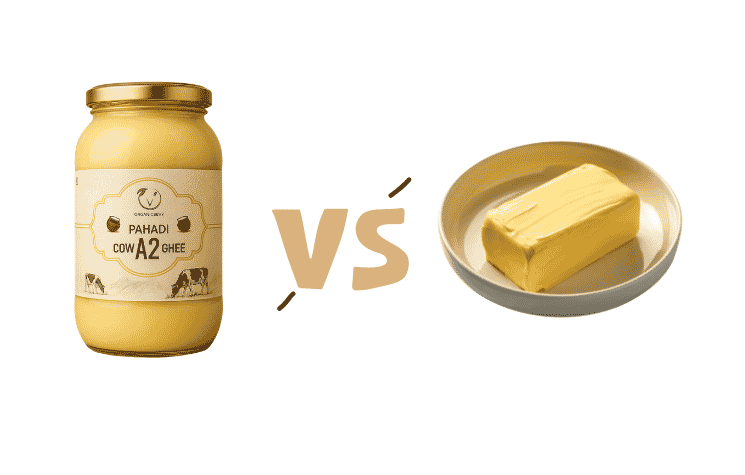
Quick Answer: Ghee and butter come from the same source, cow’s milk. But ghee is cooked longer to remove all water and milk solids. This makes ghee better for high-heat cooking, easier to digest, and longer-lasting. Butter works better for baking and spreading. Both are healthy in moderation.
What Is Ghee?
Ghee is clarified butter. You make it by slowly heating butter until the water evaporates and the milk solids separate. Those solids are then removed. What remains is pure, golden butterfat.
India has used ghee for thousands of years. Ayurveda calls it ghrita — a healing food that supports digestion, immunity, and overall health. The name comes from the Sanskrit word meaning “sprinkled.”
Traditional ghee is made using a method called bilona. Milk is first turned into curd. The curd is then churned slowly to make butter. That butter is then gently heated until pure ghee remains. This process preserves nutrients and creates a richer flavour.
What Is Butter?
Butter is made by churning cream until the fat separates from the liquid. It contains about 80% fat, with the rest being water and milk solids.
Butter has a creamy, mild flavour. It is a staple in Western cooking — ideal for baking, spreading, and making sauces. It contains lactose and casein, which are milk proteins that some people cannot digest easily.
How Is Ghee Made Differently From Butter?
| Step | Butter | Ghee |
| Starting point | Churned cream | Butter |
| Cooking | Not cooked further | Slowly heated |
| Milk solids | Present | Removed |
| Water content | ~18–20% | Near zero |
| Lactose | Present | Trace amounts only |
| Casein | Present | Trace amounts only |
Traditional A2 ghee goes even further. It uses milk from A2 cows — a specific breed known for producing milk with a different protein profile. Many people find A2 milk and A2 ghee easier to digest than regular dairy.
Ghee vs Butter: Nutrition Comparison
Here is a side-by-side comparison per 1 tablespoon (14g):
| Nutrient | Ghee | Butter |
| Calories | ~120 | ~102 |
| Total Fat | ~14g | ~12g |
| Saturated Fat | ~9g | ~7g |
| Lactose | Trace | Small amount |
| Casein | Trace | Small amount |
| Vitamins | A, D, E, K | A, D, E, K |
| Butyric Acid | Higher | Lower |
Ghee has slightly more calories and fat than butter. This is because ghee is more concentrated — all the water has been removed. But the difference is small.
Both contain fat-soluble vitamins A, D, E, and K. Ghee is slightly denser in these nutrients because it is pure fat.
Key Differences Between Ghee and Butter
1. Smoke Point
This is the biggest practical difference.
- Ghee smoke point: 485°F (250°C)
- Butter smoke point: 350°F (177°C)
Butter burns quickly at high heat. When butter burns, the milk solids char and release harmful compounds. Ghee has no milk solids. It stays stable at high temperatures.
This makes ghee the clear winner for:
- Frying
- Sautéing
- Roasting
- Tadka (tempering spices)
Butter works better for:
- Baking
- Low-heat cooking
- Spreading on bread
2. Lactose and Casein
Ghee is almost completely free of lactose and casein. These are the two components of dairy that cause digestive issues in many people.
If you feel bloated after eating dairy, ghee may suit you better than butter—many people who are lactose-intolerant report no issues with good-quality ghee.
Note: If you have a casein allergy, speak to a doctor before consuming either.
3. Butyric Acid (Butyrate)
Ghee contains more butyric acid than butter. Butyrate is a short-chain fatty acid that plays a key role in gut health. It feeds the cells lining your intestine and may reduce inflammation in the digestive tract.
This is one reason Ayurveda has recommended ghee for gut health for centuries.
4. Shelf Life and Storage
- Ghee stores at room temperature for 3 to 6 months. No refrigeration needed. Some traditionally made ghees last even longer.
- Butter must be refrigerated. It lasts 1 to 3 months. The water content makes it more prone to spoilage.
This makes ghee far more practical in Indian kitchens, especially in warmer climates.
5. Flavour
- Ghee has a rich, nutty, slightly caramelised flavour. This comes from the browning of milk solids during the cooking process.
- Butter has a mild, creamy, slightly tangy taste.
Ghee adds depth to dals, khichdis, rotis, and rice. Butter is better suited to pastries, cakes, and toast.
6. CLA and Omega-3 Fatty Acids
Both ghee and butter contain conjugated linoleic acid (CLA) and omega-3 fatty acids. These compounds are linked to reduced inflammation and better heart health.
Grass-fed and A2 versions of both tend to have higher concentrations of these beneficial fats.
Is Ghee Healthier Than Butter?
Honest answer: ghee has some clear advantages, but neither is a “superfood.”
Here is where ghee wins:
- Better for high-heat cooking (no burnt milk solids)
- Easier to digest for lactose-sensitive people
- Higher butyrate content (better for gut health)
- Longer shelf life without refrigeration
- Richer in fat-soluble vitamins per gram
Here is where butter wins:
- Better flavour for baking
- Widely available and affordable
- Good option if you have no dairy sensitivity
Both are high in saturated fat. The American Heart Association recommends limiting saturated fat to no more than 5–6% of daily calories. Use either in moderation as part of a balanced diet.
Ghee vs Butter for Cooking: Which Should You Use?
| Cooking Method | Better Choice | Why |
| Deep frying | Ghee | Higher smoke point |
| Stir-frying | Ghee | Stays stable at heat |
| Tadka/tempering | Ghee | Won’t burn spices |
| Baking | Butter | Creamy texture needed |
| Spreading on toast | Butter | Familiar, mild flavour |
| Drizzling on rice/roti | Ghee | Nutty, rich taste |
| Scrambled eggs | Either | Both work well |
Ghee vs Butter for Weight Loss
Some believe ghee helps with weight loss because it contains medium-chain triglycerides (MCTs). MCTs are metabolised differently; they are burned for energy rather than stored as fat.
However, MCT content in ghee is small. Do not expect dramatic results from ghee alone.
The better strategy: replace processed cooking oils with ghee or butter. Both are more natural and less processed than refined vegetable oils. This is a healthier swap regardless of weight goals.
Ghee vs Butter for Skin and Hair
Ghee has been used in Ayurveda as a topical treatment for centuries.
For skin: Ghee contains vitamins A and E. These are antioxidants that nourish and protect the skin. It has been traditionally used to treat dry skin, burns, and rashes.
For hair: The fatty acids in ghee coat the hair shaft. This reduces breakage and adds shine. Many people use ghee as a scalp treatment for dryness.
Butter is rarely used on skin or hair.
A2 Ghee vs Regular Ghee: Does It Matter?
Yes, especially if you care about digestibility and nutrition.
A2 cows produce milk with A2 beta-casein protein. Most Indian breeds (like Gir, Sahiwal, and Red Sindhi) naturally produce A2 milk.
Regular ghee is often made from A1 or mixed-breed cows. Some people report that A1 dairy is harder to digest.
A2 ghee benefits:
- Easier on the digestive system
- Richer in vitamins when sourced from grass-fed cows
- Closer to the traditional bilona method of preparation
If you are buying ghee, always check whether it is made from A2 milk. This matters more than most labels suggest.
How to Identify Pure Ghee
Unfortunately, ghee adulteration is common in India. Here are simple tests at home:
The heat test: Melt a teaspoon of ghee in a pan. Pure ghee melts quickly and turns golden. Adulterated ghee takes longer and may turn dark.
The glass jar test: Heat ghee in a glass jar. Pure ghee forms a solid yellow layer when it cools. If layers separate unevenly, it may be mixed with other fats.
The grain test: Pure desi ghee at room temperature shows small, rough grains. Smooth, silky texture can indicate refined oil mixing.
Smell: Pure ghee smells rich and nutty. Mild or odourless ghee may have been processed or diluted.
The safest way is to buy from a trusted brand that transparently shows its sourcing and processes.
Frequently Asked Questions
Can I replace butter with ghee in all recipes?
Yes, in most savoury recipes. For baking, ghee adds a nuttier flavour and a slightly different texture. Try it in small batches first.
Is ghee safe for people with lactose intolerance?
Usually yes. Ghee has trace amounts of lactose. Most lactose-intolerant people tolerate it well. But check with your doctor if you are severely sensitive.
Does ghee need to be refrigerated?
No. Good quality ghee lasts 3–6 months at room temperature. Keep the lid closed and away from moisture.
Which is better — ghee or olive oil?
Different uses. Ghee is better for Indian cooking and high-heat methods. Olive oil is better for salads and Mediterranean-style cooking. Both have a place in a healthy kitchen.
How much ghee should I eat per day?
1–2 teaspoons per day is a reasonable amount for most adults. It is calorie-dense, so moderation matters.
Is A2 ghee worth the price?
Yes, especially if you have dairy sensitivity or want traditionally made ghee. The difference in quality and digestibility is real.
The Bottom Line
Ghee and butter are both natural, nourishing fats. Neither is the enemy.
For daily Indian cooking — especially anything involving heat — ghee is the better choice. It handles heat well, lasts longer, and is gentler on digestion.
For baking and spreading, butter works well.
If you choose ghee, go for A2 cow ghee made the traditional way. The sourcing, the cow breed, and the preparation method all affect quality.
OrganicBevy’s A2 Cow Ghee is made from the pure milk of Himalayan-region A2 cows, using traditional bilona methods. No additives. No shortcuts. Explore our ghee →